
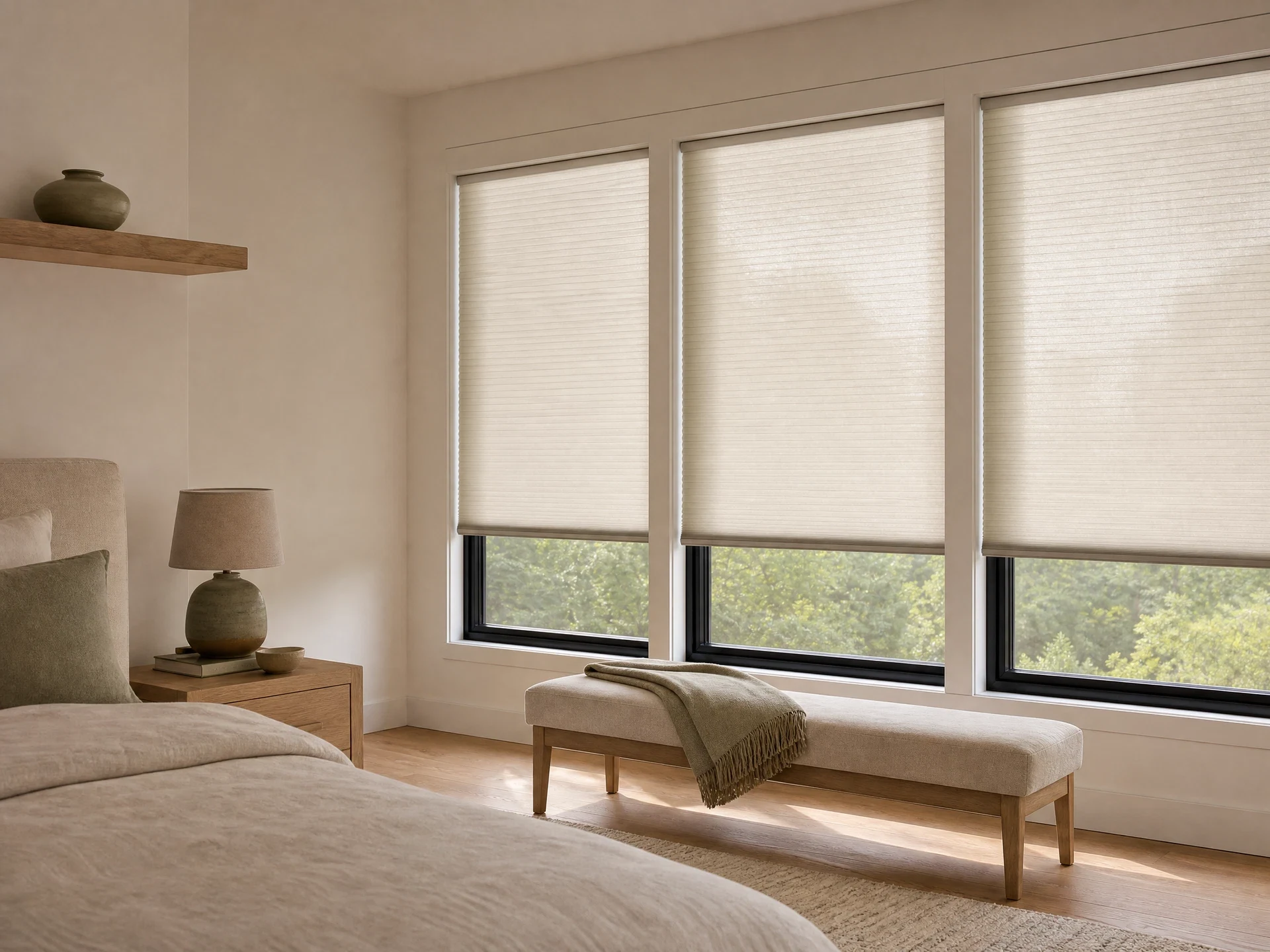
Compare single-cell and double-cell cellular shades by profile, light control and the room priorities that guide the right choice.
Short answer
Single-cell and double-cell cellular shades differ in visual profile and construction. Compare the room's privacy, daylight and comfort priorities alongside the actual samples before choosing a direction.
What to compare for Single-Cell vs. Double-Cell Cellular Shades
Use these product-specific prompts to keep the decision tied to the window, the room and the daily pattern around it.
Visual profile
Compare how each cellular direction looks against the window and surrounding trim.
Room priorities
Privacy, daylight and the role of the room should guide the conversation.
Product selection
Availability depends on the chosen treatment and material, so compare actual samples in person.
Put the choice in the context of your room
Notice when the room receives its strongest daylight, which windows need more privacy, how often the treatment will be adjusted and what visual feeling you want the window to add. Samples and measurements turn those observations into a more useful cellular shades comparison.
See the relevant cellular shades direction in person
Use this guide as a focused starting point, then explore cellular shades in more detail before scheduling an in-home consultation. The final comparison is most useful beside your actual windows.
Ready to compare the options in context?
Schedule an In-Home Consultation